When are we? A game about time
For:
Educators
Environmentalists
Planners
Policymakers
Futurists
Community groups
Researchers
Families
Colleagues
& Friends
When are we? is a cooperative game in which players take the roles of different actors in the familiar tale of Little Red Riding Hood. Using only time, they work together to change the story for better or worse.
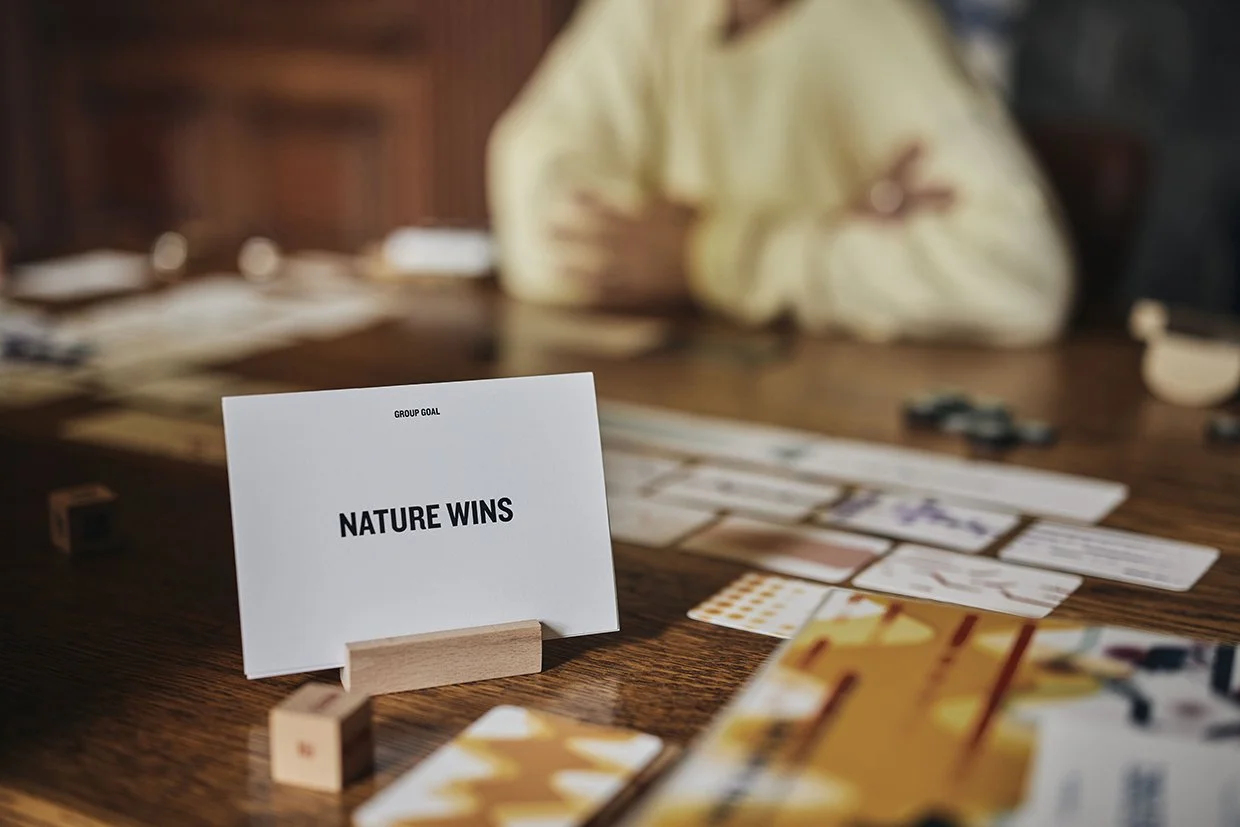
How can slowing things down help everyone to be happy? What rhythms need disrupting to allow nature to win? Using a set of unique visual cards, players explore relationships between timescales, rhythms and timings as they balance a group goal with individual priorities.
When Are We? is a 4–6 player game designed for seminar rooms, professional workshops, and casual play.
What people say about the game:
“You think about how time plays a role in everyday life”
“It’s really fun!”
“It opens up futures thinking”
“Imagination stretching”
“Can help with understanding this world better and treating it with more care.”
“It generates unique insights that couldn’t be generated with another method.”
“It opened my mind to thinking about problems in a new way.”
Video by Oliver Edwards
How do you play?
When are we? is a game for 4–6 players.
The aim of the game is to create new endings for the story of Little Red Riding Hood by working only with time.
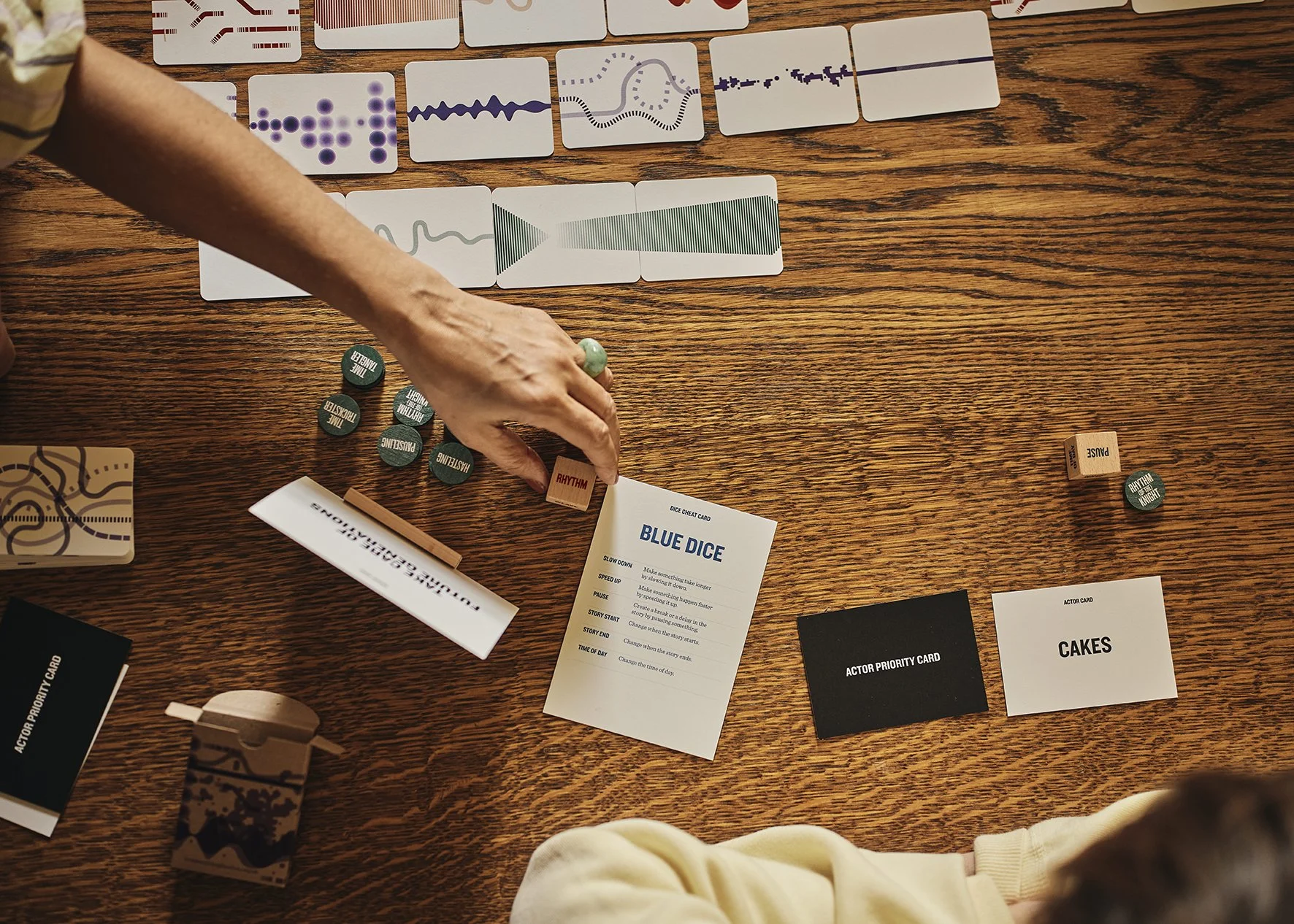
Players take the role of different human and non-human actors in the story of Little Red Riding Hood and use visual Time Cards to explore the interconnected and relational times and rhythms in the story. Players have the challenge of achieving an agreed group goal by working creatively with time.
There are two parts to the game. In Part 1 players create a timestory of the timings and rhythms of the tale of Little Red Riding Hood. In Part 2 players use Time Dice to play with time and create a new ending for the story that gets as close to their goal as possible.
To make things a little more interesting, there are personal priorities to protect and a Time Lord whose role it is to move the game along as well as Time Medals that reward players for working with time in creative ways.
The thinking behind the game
Drawing on work undertaken at the University of Bristol, the game was developed through an iterative process of research, design, testing and refinement involving policymakers, practitioners, researchers and community participants.
Different rhythms, durations, histories, expectations and future horizons shape how situations are understood and how change becomes possible. By making these temporal dimensions visible and discussable, the game creates opportunities for reflection, dialogue and collective inquiry. Rather than offering solutions, it invites participants to explore how temporal assumptions influence decisions, relationships and possibilities for action.
How can I play the game?
There are two ways to engage with When are we?
Facilitated workshops use the game as a foundation for exploring temporalities in relation to specific contexts, challenges, and questions.
Purchase the game. A limited first edition will be available from November 2026, allowing organisations, teams, and groups to play or facilitate sessions themselves.
Who is the game aimed at?
When are we? is for anyone who is curious about time and enjoys stories.
The game has been developed to support dialogue about social and environmental change, particularly among people working towards more just and sustainable futures. No specialist knowledge is required.
How many players?
Each game is designed for 4–6 players. Up to 12 players can pair up to play with one game. For large groups we run facilitated sessions with multiple games.
FAQs
How long does it take to play?
That depends on how deeply you want to explore the stories and ideas that emerge.
The game can be played in around 60 minutes, but most groups benefit from 90 minutes or more. We recommend that one player acts as timekeeper and adapts the pace to suit the group and setting.
How do I apply the principles of the game to the context I am working in?
The game is designed to explore how different ways of working with time shape change, relationships, and outcomes — to bring people around a common goal, the game uses the story of Little Red Riding Hood.
The principles (and components) of the game can be applied to a context, goal and set of actors of your own choice.
Do I need anything else to play?
A nice big table. The game involves exploring and using a set of illustrated cards. It helps to have space to lay these out and move them around easily.
Is it possible to download or play online?
No. When are we? is designed as a face-to-face experience.
The game relies on conversation, storytelling, and collaborative interaction around physical cards, making in-person play an important part of the experience.
About the project
When are we? has been developed and designed by Keri Facer and Harriet Hand, University of Bristol.
The game has been supported by funding from the British Academy and the University of Bristol ESRC Impact Acceleration Account, with additional support from the University of Bristol's social venture and commercialisation team.
The game has been shaped through collaboration, conversation, testing, and play. We are particularly grateful to Philip Tovey at ASRA, Jason Dinsdale and the Environment Agency Futures Team, the Environment Agency Water Futures Team, and the Bristol Avon Catchment Partnership for their insights, challenges, and encouragement.
Special thanks to the more than 150 participants, colleagues, practitioners, friends, and partners who have played the game and contributed feedback throughout its development. We also thank the game designers at Chance & Counters Bristol, Alison Oldfield, Howard Baker, Suffia Khanan, and Nick Hand for their support and contribution to the project.
Photography Oliver Edwards.
When are we? has been produced as part of the British Academy programme The Times of a Just Transition.
This programme brings together scholars from six continents and 14 disciplines to transform our understanding of the role of time and timing in producing justice and injustice in sustainability transitions.
Working in highly diverse local sustainability struggles relating to land, cities, identities and the imagination — we explore how temporal frames and narratives are being (mis)used to define climate problems and solutions, how timing mechanisms prioritise, coordinate and exclude different actors and ways of life, how different rhythms of life are being aligned or alienated, and how uses of time as a form of invisible power are structuring the possibilities for justice for communities in the Global South and marginalised North.
Increased awareness and understanding of these timing mechanisms will expand our political and civic capacities to detect sources of misalignment and miscommunication, lay new foundations for dialogue across difference, and open-up the possibility of a pluriversal politics.